Few processes in cooking matter as much (or are misunderstood as often) as the Maillard reaction. Described for the first time in 1912 by French chemist Louis Camille Maillard, it is responsible for the deep aromas of grilled meat, the crust on bread, the savory notes of roasted vegetables, and the complexity that defines great live fire cooking.
What Is the Maillard Reaction?
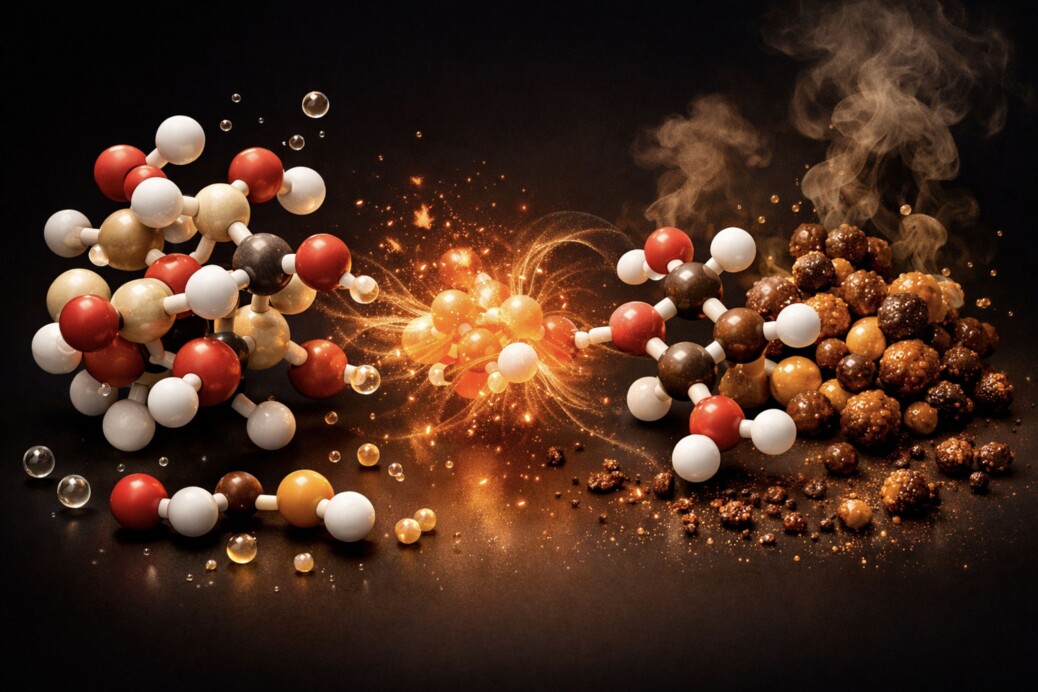
The Maillard reaction is not “browning” in the casual sense, it is a series of chemical reactions between amino acids (from proteins) and reducing sugars that occur when food is heated. Unlike caramelization, which involves sugars alone, the Maillard reaction also requires protein and heat.
It typically begins around 140-165°C (280-330°F) and accelerates as temperature rises, provided the surface of the food is dry enough to allow reactions to occur.
The result is the formation of hundreds of flavor and aroma compounds, as well as melanoidins: the brown pigments that give cooked food its characteristic color and depth.
Why the Maillard Reaction Matters in Live Fire Cooking
Live fire cooking is uniquely suited to the Maillard reaction … and uniquely capable of ruining it.
Fire introduces:
- Intense radiant heat
- Uneven temperature zones
- Moisture challenges
- Rapid surface changes
Handled well, this creates unmatched flavor. Handled poorly, it leads to burning, bitterness, or pale, underdeveloped food.
Understanding the Maillard reaction allows you to:
- Build crust without charring
- Develop aroma before doneness
- Balance heat and time
- Respect the ingredient rather than overpower it
This is where live fire cooking becomes craft, not chance.
The Conditions That Enable the Maillard Reaction
Several key factors determine whether the Maillard reaction occurs effectively:
1. Temperature
Below ~140°C, the reaction is slow or even absent. Above this range, flavor compounds develop rapidly. This is why searing, roasting, and grilling are Maillard-driven techniques.
2. Surface Dryness
Moisture is the enemy of browning. Water must evaporate before surface temperature can rise enough for the reaction to occur. Wet meat steams; dry meat browns.
This is why:
- Patting proteins dry matters
- Air-drying meat improves crust
- Overcrowding a grill kills browning
3. Time and Control
The Maillard reaction is not instant. It develops progressively. Too little time yields pale food; too much heat without control yields bitterness.
Fire discipline matters.
Maillard vs. Burning: A Critical Distinction
One of the most common misconceptions in live fire cooking is confusing Maillard development with burning.
- Maillard reaction produces complex, savory, nutty, roasted flavors.
- Pyrolysis (burning) produces bitter, acrid compounds and carbon.
The difference is control.
Burning happens when heat overwhelms moisture and structure. Maillard development happens when heat is applied with intent, allowing reactions to unfold before degradation begins.
This is why skilled pitmasters talk about zones, distance from fire, and managing flare-ups … not just temperature.
Ingredients Matter
Not all foods Maillard equally.
- Proteins rich in amino acids (meat, fish, dairy) respond strongly
- Foods with natural sugars brown more readily
- Marinades high in sugar brown faster (and burn faster)
- Salt can enhance browning indirectly by drawing surface moisture
Understanding this helps cooks adapt technique rather than follow recipes blindly.
Fire as a Tool, not a Shortcut
Live fire cooking will tempt you to chase color quickly. Flames lick, surfaces darken, and food looks “done” long before flavor has properly developed. But true flavor emerges when:
- Heat is applied deliberately
- Distance from fire is adjusted continuously
- Food is moved, rested, and returned with purpose
This is why great live fire cooking often looks calm: the drama happens at the molecular level.
Why This Matters
The Maillard reaction is not a trick. It is not a hack. It is not something you “add” to cooking: It is the natural consequence of heat applied with knowledge and restraint. For those who cook over fire, understanding it is not optional: it is the difference between burning food and building flavor. And that difference defines the craft.
