
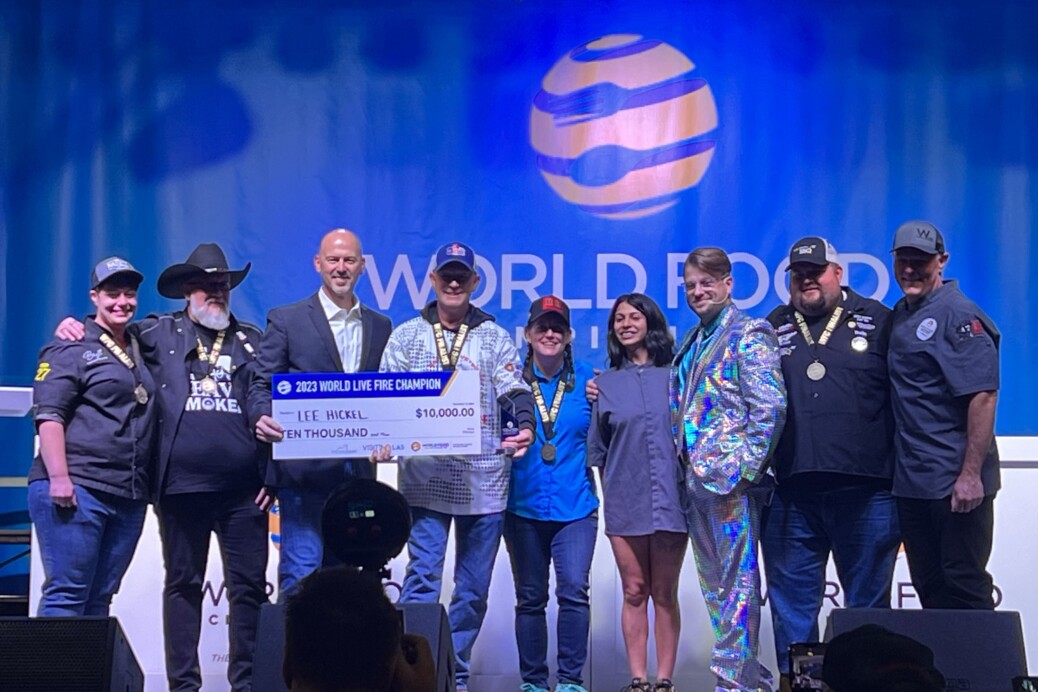
Live fire cooking has always existed at the intersection of instinct and discipline. It is physical, unpredictable, and unforgiving … yet capable of extraordinary precision when approached with intent. As interest in live fire cooking continues to grow, a question naturally arises: what role do competitions play in advancing the craft?
At their best, competitions are not spectacles. They are accelerators of learning, guardians of standards, and mirrors that reveal skill gaps. When designed with purpose, they become one of the most effective tools for elevating live fire cooking from casual practice to respected culinary discipline.
Competition as a Learning Environment
Unlike controlled kitchen environments, live fire competitions introduce variables that cannot be simulated, nor predicted: fluctuating heat, fuel behavior and environmental conditions. These constraints force participants to develop true fire literacy … not just recipes.
Participating in a well-structured competition demands:
- Heat management under time pressure
- Adaptability when fire behaves unpredictably
- Execution without shortcuts
- Respect for safety and process
These conditions compress months of informal learning into a single, high-intensity experience. Even for seasoned cooks, competitions reveal habits, assumptions, and blind spots that routine cooking often hides under the rug.
Raising Standards Through Shared Benchmarks
Competitions also establish reference points. When judged against clear criteria (e.g. taste, texture, balance, technique, presentation, and adherence to rules), they create a shared language of quality.
This is critical for a discipline like cooking, which often suffers from subjective interpretation and inconsistent expectations. Competitions introduce:
- Defined rules
- Transparent judging frameworks
- Consistent evaluation across participants
Over time, these benchmarks raise the baseline for everyone involved: competitors, judges, organizers, and even audiences. Standards stop being abstract ideas and become measurable outcomes.
Discipline Over Performance
In an era where food culture is increasingly shaped by visibility and virality, competitions offer an important counterbalance. Properly run live fire competitions reward execution over theatrics: Fire is not judged by how dramatic it looks, but by:
- How evenly it cooks
- How well it is controlled
- How it serves the ingredient
This distinction matters. When competitions prioritize discipline, they reinforce the idea that live fire cooking is not about spectacle, but about responsibility and restraint. Fire becomes a tool, not a prop.
Knowledge Transfer and Community Growth
Competitions also serve as powerful platforms for knowledge exchange. Participants observe each other’s techniques, fuel choices, workflows, and problem-solving approaches. Judges provide feedback grounded in experience and standards. Conversations continue long after the event ends.
This collective exposure accelerates the maturity of the community. Techniques spread. Bad habits are challenged. Best practices emerge organically and not through instruction alone, but through observation and comparison.
In this sense, competitions are not endpoints. They are nodes in a wider learning ecosystem.
From Events to Institutions
For competitions to truly advance the art of live fire cooking, they must be treated as more than one-off events. They require:
- Credible governance
- Clear ethical frameworks
- Safety oversight
- Consistent judging standards
When these elements are in place, competitions evolve into institutions: trusted reference points that shape culture rather than chase attention.
This is where organizations like the Middle East Live Fire Cooking Society see their role: not to multiply events, but to design competition formats that serve the craft, protect participants, and contribute to long-term skill development across the region.
Competition as Stewardship
At its core, live fire cooking carries risk: to people, to food, and to reputation. Competitions, when responsibly governed, act as stewards of that risk. They demonstrate what responsible fire use looks like in practice, setting examples for both participants and observers.
In doing so, they reinforce a simple but powerful idea: fire deserves respect.
Looking Forward
As live fire cooking continues to gain prominence in the Middle East, competitions will play an increasingly important role in shaping its future. Not as entertainment, but as structure. Not as performance, but as progression.
When built on discipline, standards, and shared values, competitions do more than crown winners. They advance the craft itself.
And that, ultimately, is their greatest contribution.
