In live fire cooking, fat is often treated as a problem to avoid or even an enemy to control. In reality, fat is a structural component of flavor and texture, and one of the clearest indicators of technical maturity.
When rendered properly, fat delivers moisture, mouthfeel, and depth. When rushed, it creates flare-ups, bitterness, and greasy, unpleasant food. The difference is not equipment or seasoning: It is patience.
Rendering Is Not Melting
One of the most common misconceptions is equating fat rendering with melting.
- Melting is fat liquefying rapidly under high heat.
- Rendering is fat slowly breaking down, releasing moisture and flavor while preserving structure.
Rendering requires time at controlled heat, not aggressive flames. When fat melts too quickly, it drips, burns, and ignites – creating flare-ups that scorch food and coat it with bitter compounds.
Proper rendering transforms fat from a liability into an asset.
Why Live Fire Makes Rendering Harder and Better
Live fire introduces challenges that controlled kitchens do not:
- Uneven radiant heat
- Variable airflow
- Open exposure to flame
All these factors punish impatience, when high heat overwhelms fat before connective tissue and collagen have time to break down. But when managed well, live fire offers advantages (e.g. gradual heat, natural convection or the ability to reposition food continuously, that allow rendering to happen progressively, rather than destructively.
Poultry Skin: The Ultimate Test
Few things expose poor fat management faster than poultry skin: Crisp skin is not achieved by blasting heat, it requires:
- Drying the skin surface
- Moderate, even heat
- Time for subcutaneous fat to render before browning
When heat is too intense, skin blisters and burns while fat remains trapped beneath, producing a rubbery texture and flare-ups. Patience allows fat to escape slowly, resulting in crispness.
Large Cuts and Fat Caps
In cuts like brisket, ribeye, or lamb shoulder, fat plays a dual role:
- Internal lubrication
- External protection
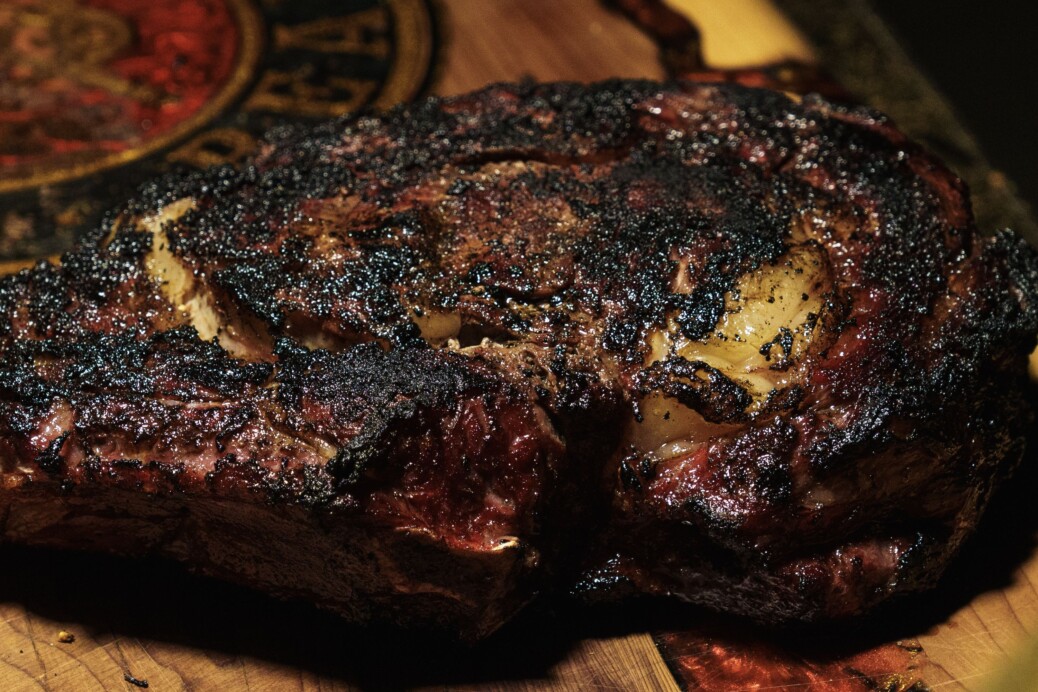
A thick fat cap is not meant to be incinerated. It should render gradually, basting the meat and insulating it from excessive heat.
Rushing this process leads to:
- Burnt exterior
- Under-rendered interior fat
- Greasy mouthfeel
Skilled cooks manage distance from fire, orientation, and time, allowing fat to do its work before it disappears.
Flare-Ups Are a Symptom, Not the Problem
Flare-ups are often blamed on fire. In truth, they are usually the result of poor fat management.
Common causes include:
- Cooking too close to flame
- Introducing fresh fuel mid-cook without repositioning food
- Rendering fat directly over open fire
Experienced cooks anticipate where fat will drip and position food accordingly. They allow fat to render away from flame, then return food to higher heat only when appropriate.
Fire discipline begins with fat awareness.
Fat Needs Time and Space
Rendering requires:
- Moderate, sustained heat
- Physical distance from flame
- Room for fat to escape without igniting
This is why heat zones matter. Rendering rarely happens in the hottest part of the fire. It happens adjacent to it. Moving food away from flame is not retreat: it is technique.
The Competition Perspective
In disciplined competitions, judges are acutely sensitive to fat handling.
Poorly rendered fat results in:
- Greasy texture
- Unpleasant mouthfeel
- Burnt or bitter notes
Proper rendering, by contrast, often goes unnoticed, which is exactly the point. Fat should support the dish quietly, not announce itself.
This reinforces a broader truth:
Good fat management is invisible when done well.
Rendering fat over fire sits at the intersection of:
- Fire management
- Patience
- Ingredient respect
It is not flashy. It cannot be rushed.
Fat teaches patience.
Patience builds control.
And control is where flavor lives.
